
— Total pregnancies 10000+ and above —
Surrogacy India Blog
Personalised and human approach to surrogacy treatment.
Understanding the Legal Process of Surrogacy in India
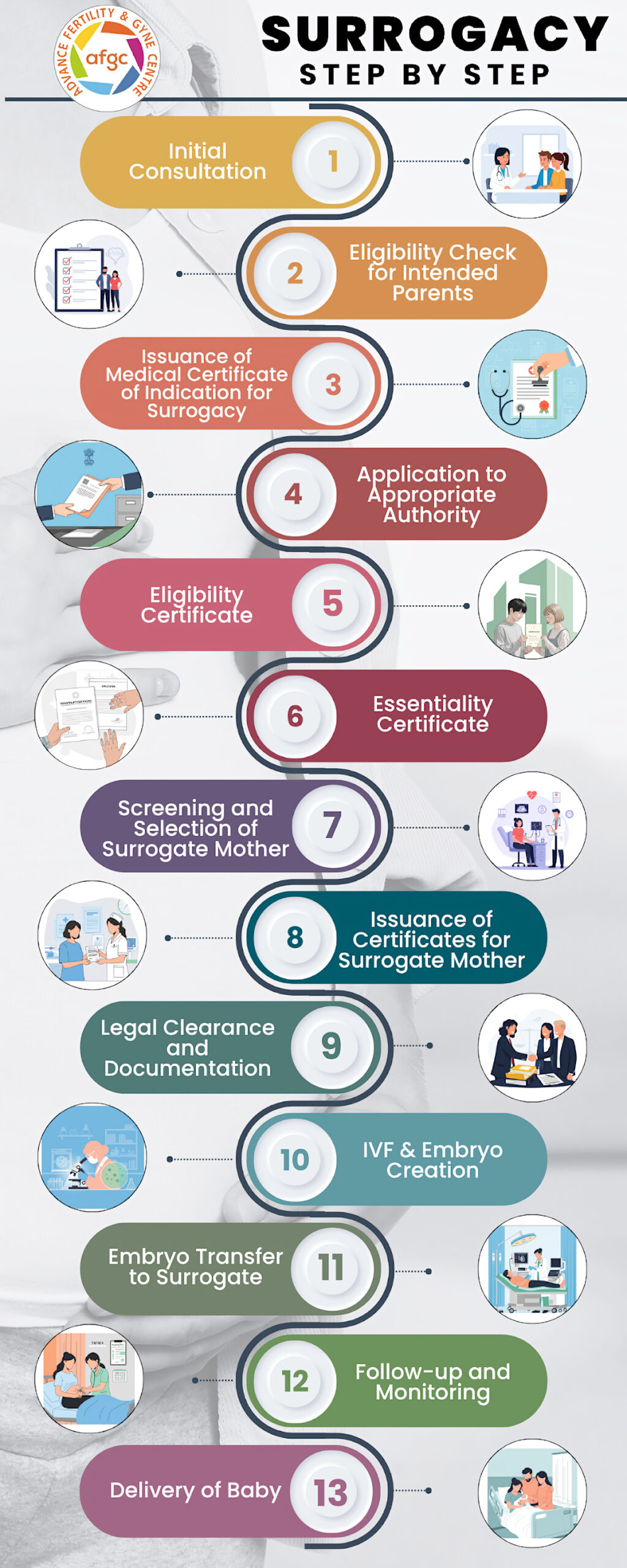
The legal process is what transforms surrogacy from a medical procedure into a recognized parenthood pathway. In India, the procedure is tightly regulated to ensure transparency and protect the surrogate mother and child.
Step 1: Medical Certification
The intending couple or woman must approach the District Medical Board, which evaluates and certifies medical eligibility for surrogacy. Without this certificate, no surrogacy can proceed.
Step 2: Finding a Surrogate
Surrogates must come forward voluntarily. The law bans advertising or commercial recruitment. Most surrogates are known individuals of the intending parents.
Step 3: Registration of Clinic
Only clinics registered under the Surrogacy (Regulation) Act and ART (Regulation) Act, 2021 can legally perform the procedure.
Step 4: Written Consent and Agreement
All parties — the intending parents, the surrogate, and her spouse (if married) — must sign detailed consent forms. The agreement is not commercial; it only covers medical expenses and insurance.
Step 5: Insurance Coverage
The intending parents must provide 36 months of insurance for the surrogate to cover pregnancy-related complications and postpartum care.
Step 6: Court Order and Birth Certificate
After birth, a court order secures parentage, ensuring that the child legally belongs to the intending couple or woman. The surrogate has no parental rights. The birth certificate is then issued in the name of the intending parents.
Why the Legal Process Matters
This process, though stringent, protects all parties:
- The surrogate from exploitation.
- The child from legal disputes.
- The intending parents from custody battles.